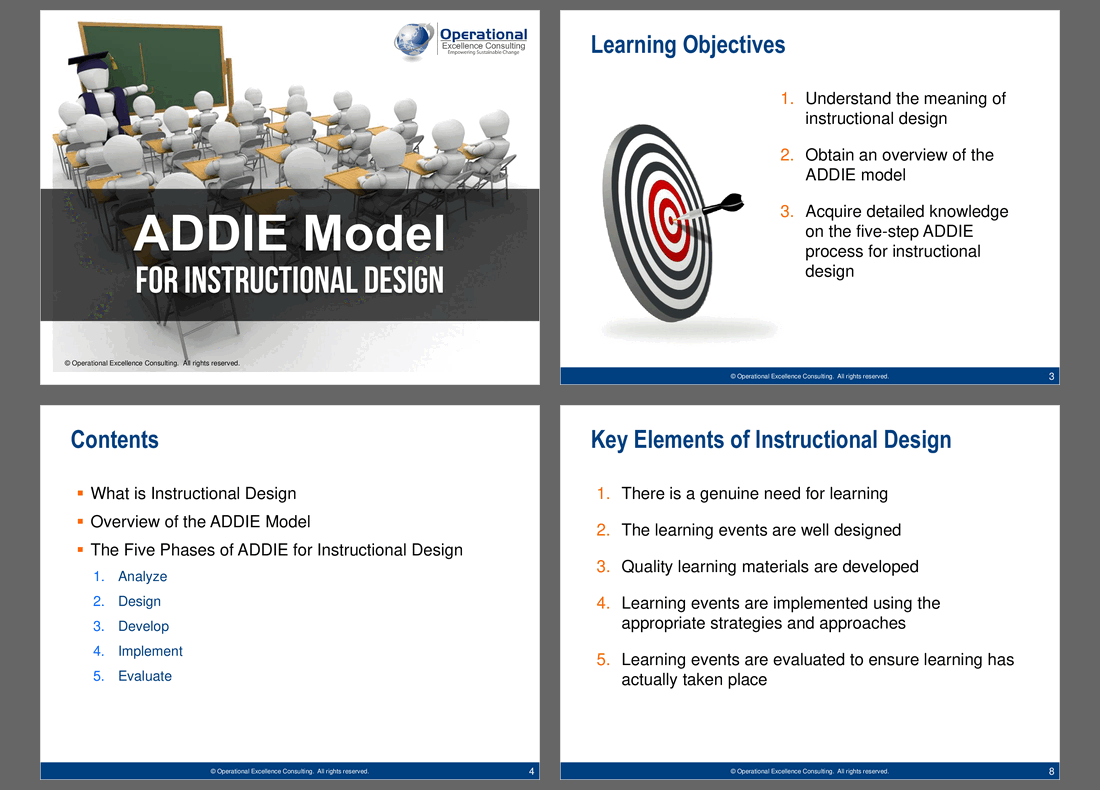

ADDIE Model for Instructional Design   62-slide PPT PowerPoint presentation slide deck (PPTX)
$59.00

ADDIE Model for Instructional Design (62-slide PPT PowerPoint presentation slide deck (PPTX)) Preview Image
Log in to unlock full preview.
ADDIE Model for Instructional Design (62-slide PPT PowerPoint presentation slide deck (PPTX)) Preview Image
Arrow   Click main image to view in full screen.

ADDIE Model for Instructional Design (PowerPoint PPTX Slide Deck)

PowerPoint (PPTX) 62 Slides

Top 1,000 Best Practice $59.00
Developed by a Learning Experience Designer with global experience at industry giants like Microsoft & IBM, this presentation is your roadmap to applying the ADDIE Model for effective instructional design and training development.
Add to Cart


Immediate download
Fully editable PowerPoint
Free lifetime updates

BENEFITS OF THIS POWERPOINT DOCUMENT

  1. Understand the ADDIE model for instructional design.
  2. Learn how to apply the five-step ADDIE model to design, develop and deliver an effective training program that suits the needs of learners.

EMPLOYEE TRAINING PPT DESCRIPTION

ADDIE Model for Instructional Design PPT by Allan Ung: Download step-by-step training framework covering Analyze, Design, Develop, Implement & Evaluate phases for workforce training. ADDIE Model is a 62-slide PPT PowerPoint presentation slide deck (PPTX) available for immediate download upon purchase.

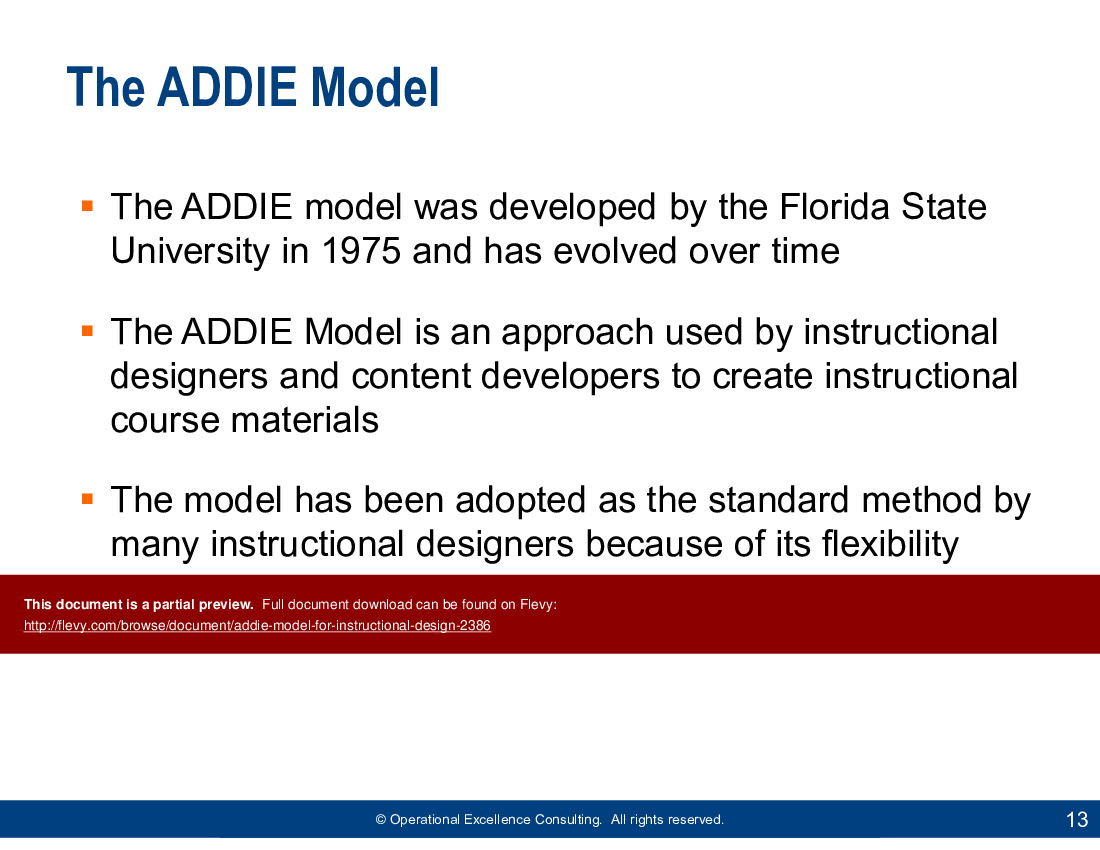
Developed by the Florida State University, the ADDIE Model is a systematic approach used by instructional designers and content developers to create instructional course materials.

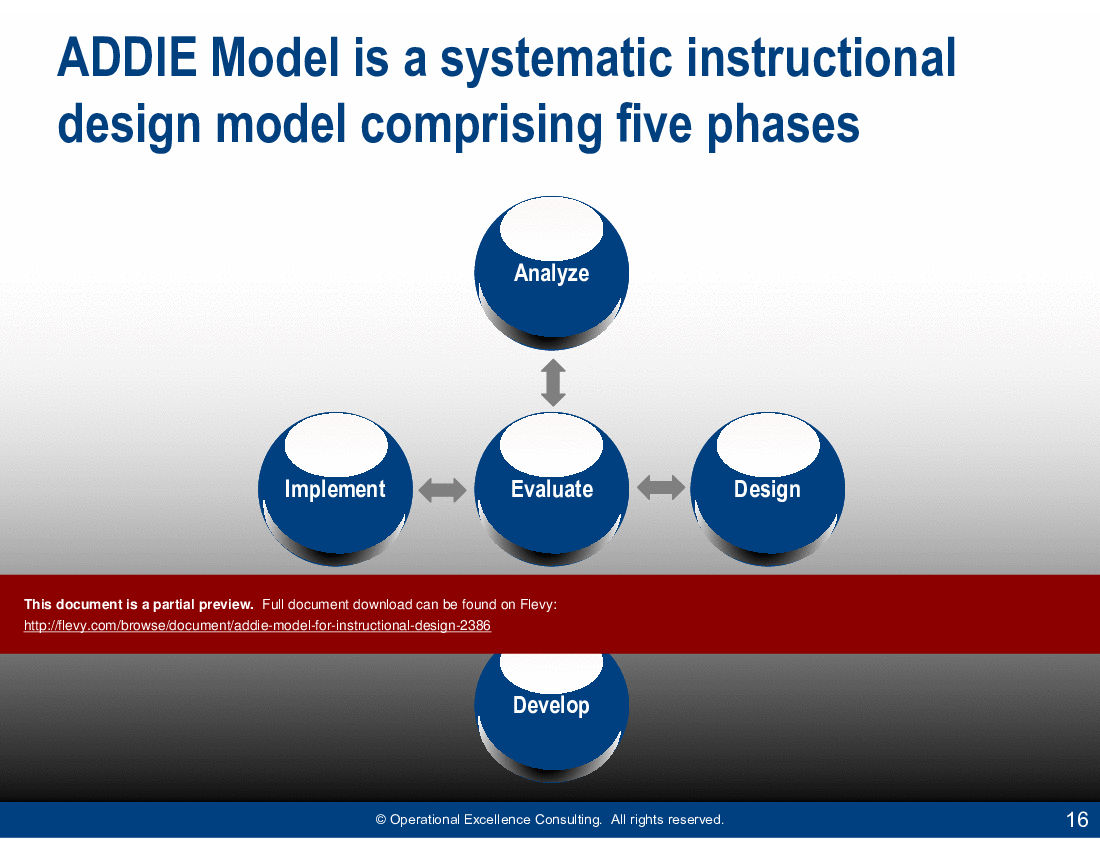
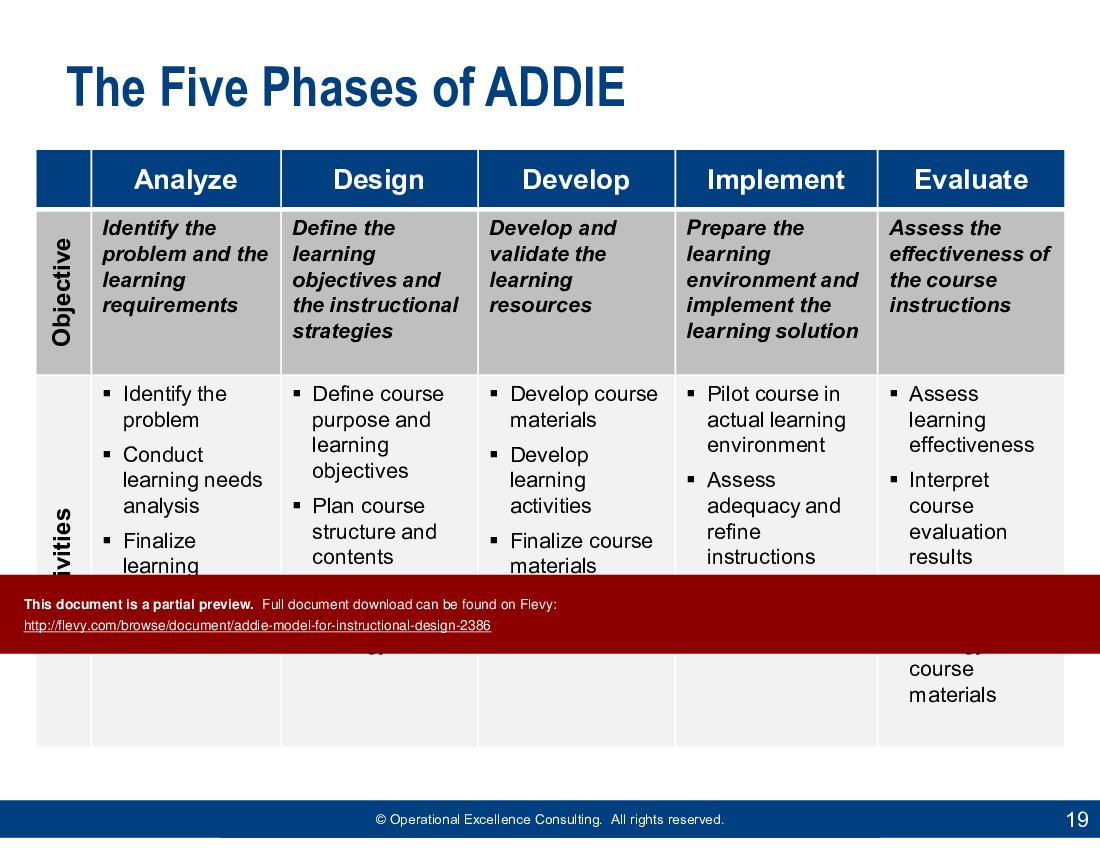
Comprising five simple phases—Analyze, Design, Develop, Implement and Evaluate, the model has been adopted as the standard method by many instructional designers because of its flexibility.

The ADDIE model represents a lean, dynamic, flexible guideline for building effective training and performance support tools. The model helps to save time and money by catching problems while they are still easy to fix.

Although the ADDIE process resembles the traditional waterfall model, users could adapt it in a flexible way by incorporating iterations and rapid prototyping between the phases. 

CONTENTS

1. What is Instructional Design
2. Overview of the ADDIE Model
3. The Five Phases of ADDIE for Instructional Design
(a) Analyze
(b) Design
(c) Develop
(d) Implement
(e) Evaluate

Note: You may also be interested in the following related presentations:
1. Training Needs Analysis (TNA)
2. Training Evaluating Model (TEM)

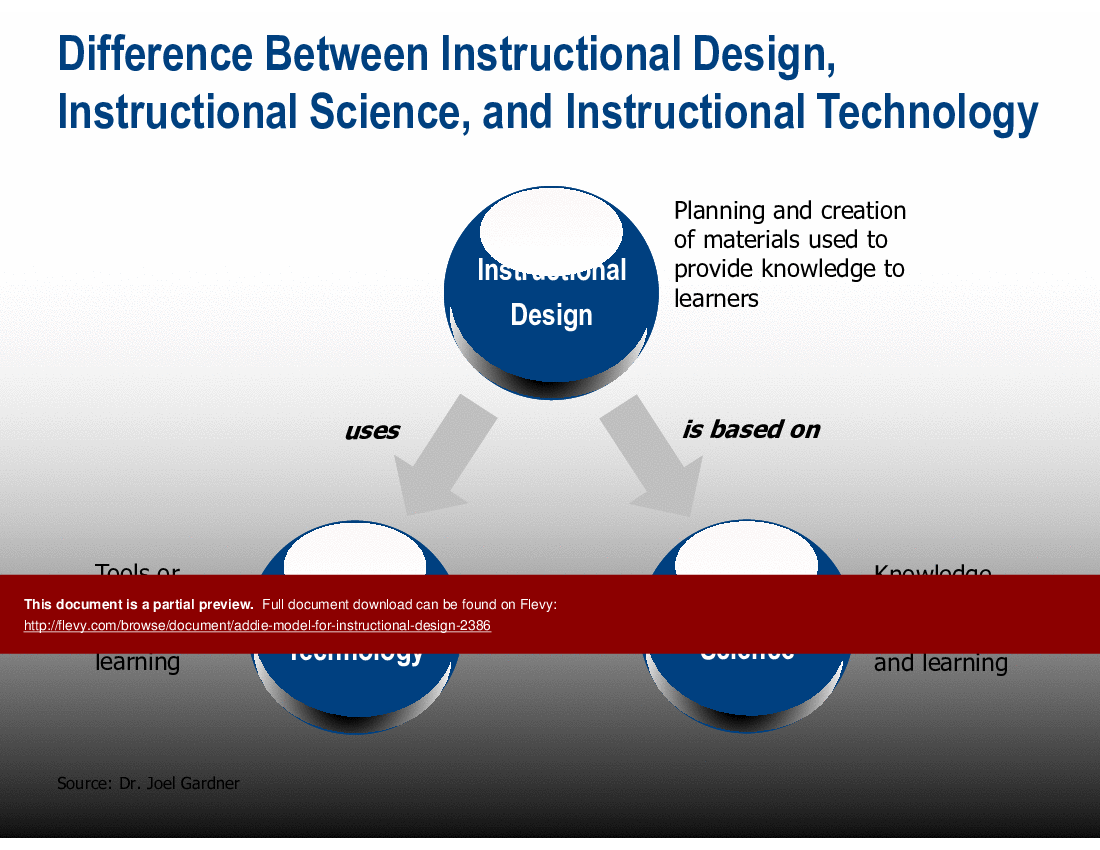
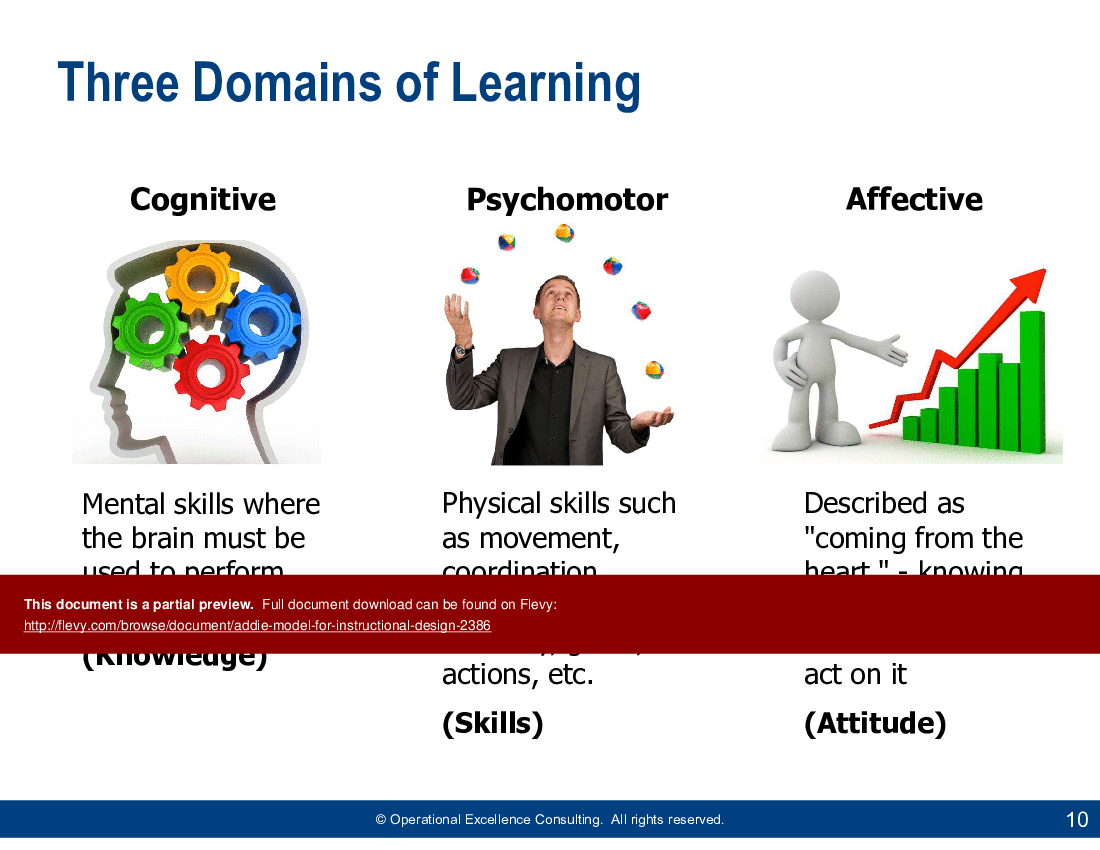
This presentation delves into the nuances of instructional design, instructional science, and instructional technology. It clarifies how these domains intersect and diverge, providing a comprehensive understanding of the tools and knowledge required for effective learning. The PPT also explores the three domains of learning—cognitive, psychomotor, and affective—detailing how each domain contributes to a holistic learning experience.

The ADDIE model is broken down into actionable steps, with detailed deliverables for each phase. From identifying the problem to conducting a learning needs analysis, the presentation offers a structured approach to developing course materials. It also covers the implementation phase, including pilot courses and learner feedback, ensuring that the instructional design is both effective and efficient.

Got a question about the product? Email us at support@flevy.com or ask the author directly by using the "Ask the Author a Question" form. If you cannot view the preview above this document description, go here to view the large preview instead.

MARCUS OVERVIEW

This synopsis was written by Marcus [?] based on the analysis of the full 62-slide presentation.


Executive Summary
The ADDIE Model for Instructional Design presentation is a comprehensive guide developed by Operational Excellence Consulting. It provides a structured framework for creating effective instructional materials through the 5 phases: Analyze, Design, Develop, Implement, and Evaluate. This presentation equips instructional designers and educators with the tools to systematically assess learning needs, design tailored training programs, and evaluate their effectiveness. By utilizing this model, organizations can enhance their training initiatives, ensuring that learning objectives are met and that instructional strategies are aligned with desired outcomes.

Who This Is For and When to Use
•  Instructional designers seeking a structured approach to course development
•  Corporate trainers looking to enhance their training programs
•  Learning and development teams focused on improving educational outcomes
•  Educational institutions aiming to implement systematic instructional design

Best-fit moments to use this deck:
•  During the development of new training programs or courses
•  When conducting training needs assessments within an organization
•  To refine existing instructional materials based on evaluation feedback

Learning Objectives
•  Understand the meaning of instructional design
•  Obtain an overview of the ADDIE model
•  Acquire detailed knowledge on the five-step ADDIE process for instructional design
•  Identify learning requirements through analysis
•  Design effective instructional strategies and materials
•  Implement training solutions in real-world environments
•  Evaluate the effectiveness of instructional programs

Table of Contents
•  What is Instructional Design (page 6)
•  Overview of the ADDIE Model (page 13)
•  The Five Phases of ADDIE for Instructional Design (page 19)
•  Analyze Phase (page 21)
•  Design Phase (page 30)
•  Develop Phase (page 36)
•  Implement Phase (page 42)
•  Evaluate Phase (page 48)

Primary Topics Covered
•  Instructional Design - A systematic process for designing, developing, and delivering instructional materials tailored to meet learning needs.
•  ADDIE Model Overview - A flexible framework adopted by instructional designers for creating effective training materials through 5 distinct phases.
•  Analyze Phase - Identifying learning requirements and performance gaps through needs analysis and stakeholder validation.
•  Design Phase - Defining course objectives and instructional strategies to ensure alignment with desired outcomes.
•  Develop Phase - Creating and validating instructional materials and learning activities that engage learners effectively.
•  Implement Phase - Preparing the learning environment and executing the training program while gathering feedback for refinement.
•  Evaluate Phase - Assessing the effectiveness of the training through learner evaluations and course feedback to inform future improvements.

Deliverables, Templates, and Tools
•  Instructional materials template for course development
•  Learning needs analysis framework for identifying training requirements
•  Course evaluation instruments for assessing learner outcomes
•  Project management plan template for instructional design projects
•  Feedback collection tools for continuous improvement of training programs

Slide Highlights
•  Overview of the ADDIE model illustrating its 5 phases
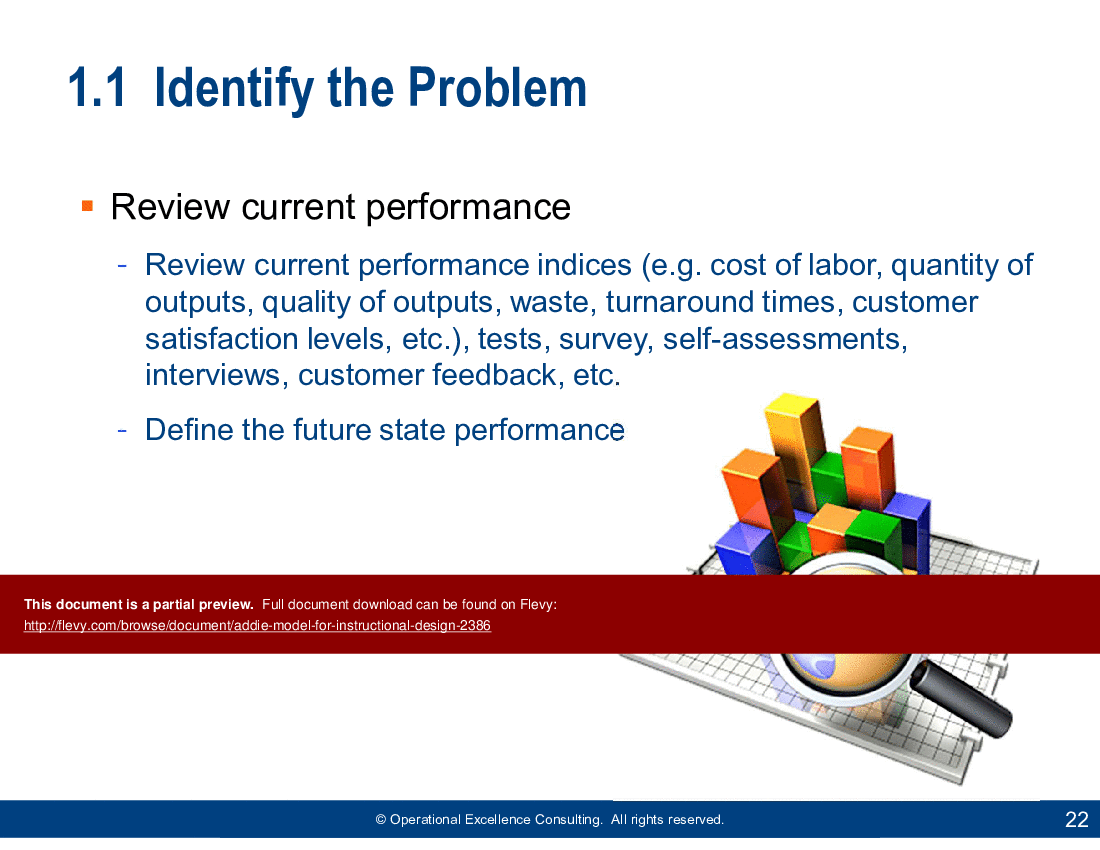
•  Detailed breakdown of the Analyze phase with key activities and deliverables
•  Visual representation of the Design phase outlining course objectives and strategies
•  Examples of learning activities developed in the Develop phase
•  Assessment strategies highlighted in the Evaluate phase for measuring training effectiveness

Potential Workshop Agenda
ADDIE Model Overview Session (60 minutes)
•  Introduce the ADDIE model and its significance in instructional design
•  Discuss each phase with real-world examples

Hands-On Analyze Phase Workshop (90 minutes)
•  Conduct a learning needs analysis using provided templates
•  Validate problem statements with group discussions

Design and Develop Workshop (120 minutes)
•  Define course objectives and instructional strategies
•  Collaborate on developing course materials and learning activities

Customization Guidance
•  Tailor the learning needs analysis to reflect specific organizational contexts and performance metrics
•  Adjust instructional strategies based on the target audience's learning preferences and backgrounds
•  Incorporate organizational branding and terminology into course materials for consistency

Secondary Topics Covered
•  Differences between instructional design, instructional science, and instructional technology
•  Key elements and competencies required for effective instructional design
•  The role of andragogy in adult learning compared to pedagogyDocument FAQ
What is the ADDIE model?
The ADDIE model is a systematic instructional design framework comprising 5 phases: Analyze, Design, Develop, Implement, and Evaluate, used to create effective training programs.

How can I customize the ADDIE model for my organization?
You can tailor the model by adapting the learning needs analysis, instructional strategies, and course materials to align with your organization's specific goals and audience.

What are the key deliverables in the Analyze phase?
Key deliverables include a problem statement, task list, learner profile, project management plan, and statement of constraints.

How do I assess the effectiveness of my training program?
Effectiveness can be assessed through learner evaluations, instructor feedback, and course evaluation results, which should be analyzed to inform future improvements.

What types of learning activities can be developed in the ADDIE model?
Learning activities can include lectures, group discussions, simulations, role plays, and on-the-job training exercises.

What is the importance of the Evaluate phase?
The Evaluate phase is crucial for determining whether learning objectives have been met and for identifying areas for improvement in instructional strategies and materials.

How does the ADDIE model save time and resources?
By identifying potential issues early in the design process, the ADDIE model allows for timely adjustments, reducing the risk of costly revisions later.

What competencies should an instructional designer possess?
An instructional designer should have competencies in planning and analysis, design and development, implementation, and management of instructional materials.

What is the difference between andragogy and pedagogy?
Andragogy focuses on adult learning principles, emphasizing self-directed learning and real-life problem-solving, while pedagogy is more teacher-centered and often applies to younger students.

Glossary
•  ADDIE - A systematic instructional design model comprising 5 phases: Analyze, Design, Develop, Implement, Evaluate.
•  Instructional Design - The process of creating educational experiences that make the acquisition of knowledge and skill more efficient and effective.
•  Learning Needs Analysis - A systematic approach to identifying gaps in knowledge and skills within an organization.
•  Course Evaluation - The process of assessing the effectiveness and quality of a training program.
•  Andragogy - The method and practice of teaching adult learners.
•  Pedagogy - The method and practice of teaching children or younger students.
•  Learning Objectives - Specific statements detailing what learners are expected to achieve by the end of a training program.
•  Instructional Strategy - The approach taken to deliver instructional content effectively.
•  Feedback Collection - The process of gathering responses from learners and instructors to improve course materials and delivery.
•  Performance Gap - The difference between current performance and desired performance levels.
•  Project Management Plan - A formal document that outlines how a project will be executed, monitored, and controlled.
•  Evaluation Instruments - Tools used to measure the effectiveness of training programs and learner outcomes.

Source: Best Practices in Employee Training PowerPoint Slides: ADDIE Model for Instructional Design PowerPoint (PPTX) Presentation Slide Deck, Operational Excellence Consulting


$59.00
Developed by a Learning Experience Designer with global experience at industry giants like Microsoft & IBM, this presentation is your roadmap to applying the ADDIE Model for effective instructional design and training development.
Add to Cart
  

ABOUT THE AUTHOR

Author image
Additional documents from author: 257
Terms of usage (for all documents from this author)

Operational Excellence Consulting, founded in 2009 by Allan Ung, draws from extensive experience at Microsoft, IBM, and Underwriters Laboratories (UL). We specialize in strategy deployment, customer experience design, and operational excellence, applying Design Thinking, Lean, and Systems Thinking to maximize customer value and minimize waste.

Our ... [read more]

Ask the Author a Question

You must be logged in to contact the author.

Click here to log in Click here register

Did you know?
The average daily rate of a McKinsey consultant is $6,625 (not including expenses). The average price of a Flevy document is $65.

Bundle and save! You can save up to % with bundles!

View bundle(s)


Trusted by over 10,000+ Client Organizations
Since 2012, we have provided business templates to over 10,000 businesses and organizations of all sizes, from startups and small businesses to the Fortune 100, in over 130 countries.
AT&T GE Cisco Intel IBM Coke Dell Toyota HP Nike Samsung Microsoft Astrazeneca JP Morgan KPMG Walgreens Walmart 3M Kaiser Oracle SAP Google E&Y Volvo Bosch Merck Fedex Shell Amgen Eli Lilly Roche AIG Abbott Amazon PwC T-Mobile Broadcom Bayer Pearson Titleist ConEd Pfizer NTT Data Schwab


Read Customer Testimonials

 
"Flevy is now a part of my business routine. I visit Flevy at least 3 times each month.

Flevy has become my preferred learning source, because what it provides is practical, current, and useful in this era where the business world is being rewritten.

In today's environment where there are so "

– Omar Hernán Montes Parra, CEO at Quantum SFE
 
"As a consulting firm, we had been creating subject matter training materials for our people and found the excellent materials on Flevy, which saved us 100's of hours of re-creating what already exists on the Flevy materials we purchased."

– Michael Evans, Managing Director at Newport LLC
 
"Last Sunday morning, I was diligently working on an important presentation for a client and found myself in need of additional content and suitable templates for various types of graphics. Flevy.com proved to be a treasure trove for both content and design at a reasonable price, considering the time I "

– M. E., Chief Commercial Officer, International Logistics Service Provider
 
"As a young consulting firm, requests for input from clients vary and it's sometimes impossible to provide expert solutions across a broad spectrum of requirements. That was before I discovered Flevy.com.

Through subscription to this invaluable site of a plethora of topics that are key and crucial to consulting, I "

– Nishi Singh, Strategist and MD at NSP Consultants
 
"If you are looking for great resources to save time with your business presentations, Flevy is truly a value-added resource. Flevy has done all the work for you and we will continue to utilize Flevy as a source to extract up-to-date information and data for our virtual and onsite presentations!"

– Debbi Saffo, President at The NiKhar Group
 
"[Flevy] produces some great work that has been/continues to be of immense help not only to myself, but as I seek to provide professional services to my clients, it gives me a large "tool box" of resources that are critical to provide them with the quality of service and outcomes they are expecting."

– Royston Knowles, Executive with 50+ Years of Board Level Experience
 
"FlevyPro provides business frameworks from many of the global giants in management consulting that allow you to provide best in class solutions for your clients."

– David Harris, Managing Director at Futures Strategy
 
"As an Independent Management Consultant, I find Flevy to add great value as a source of best practices, templates and information on new trends. Flevy has matured and the quality and quantity of the library is excellent. Lastly the price charged is reasonable, creating a win-win value for "

– Jim Schoen, Principal at FRC Group


Save with Bundles

This document is available as part of the following discounted bundle(s):

Save %!
Complete Instructional Design Toolkit

This bundle contains 3 total documents. See all the documents to the right.

$139.00


Add Bundle & Save


Customers Also Bought These Documents


Customers Also Like These Documents

Explore Related Management Topics


Your Recently Viewed Documents
Download our FREE Organization, Change, & Culture, Templates

Download our free compilation of 50+ slides and templates on Organizational Design, Change Management, and Corporate Culture. Methodologies include ADKAR, Burke-Litwin Change Model, McKinsey 7-S, Competing Values Framework, etc.